

Welcome to "Donut Break the Internet", Donutz Digital’s weekly newsletter dedicated to digital marketing news. Here, you'll find a roundup of must-know updates, practical tips, and in-depth analyses on marketing.
This week's Donutz:
Ask users to register sooner 🧠
Marketers want more control over media buying 🎯
Organic search traffic is down year over year 📉
Most Instagram ads ran on Reels in 2025 🎥
If you haven’t already, make sure to subscribe! Until then, enjoy your read. 🚀
Ask users to register sooner 🧠
Asking users to register at the start of a journey often outperforms gating at the end.
Conventional wisdom says “don’t scare users away early,” but behavioral data suggests the opposite in many contexts. When users are asked to commit upfront, they mentally switch from “browsing” to “participating.”
That commitment effect increases follow-through and completion rates, especially when the value proposition is clear and the ask is lightweight (email, social login, or progressive profiling).
The article also highlights how end-of-flow registration can backfire: users feel tricked after investing time, triggering abandonment at the very last step.
Early registration, when framed as part of the experience rather than a toll booth, can actually feel more honest. This doesn’t mean slapping a signup wall everywhere, it means aligning the timing of the ask with user motivation.
Read: Ask users to register at the start (not the end)

Marketers want more control over media buying 🎯
According to MediaPost, a growing share of marketers plan to increase “principal-based” media buying in 2026.
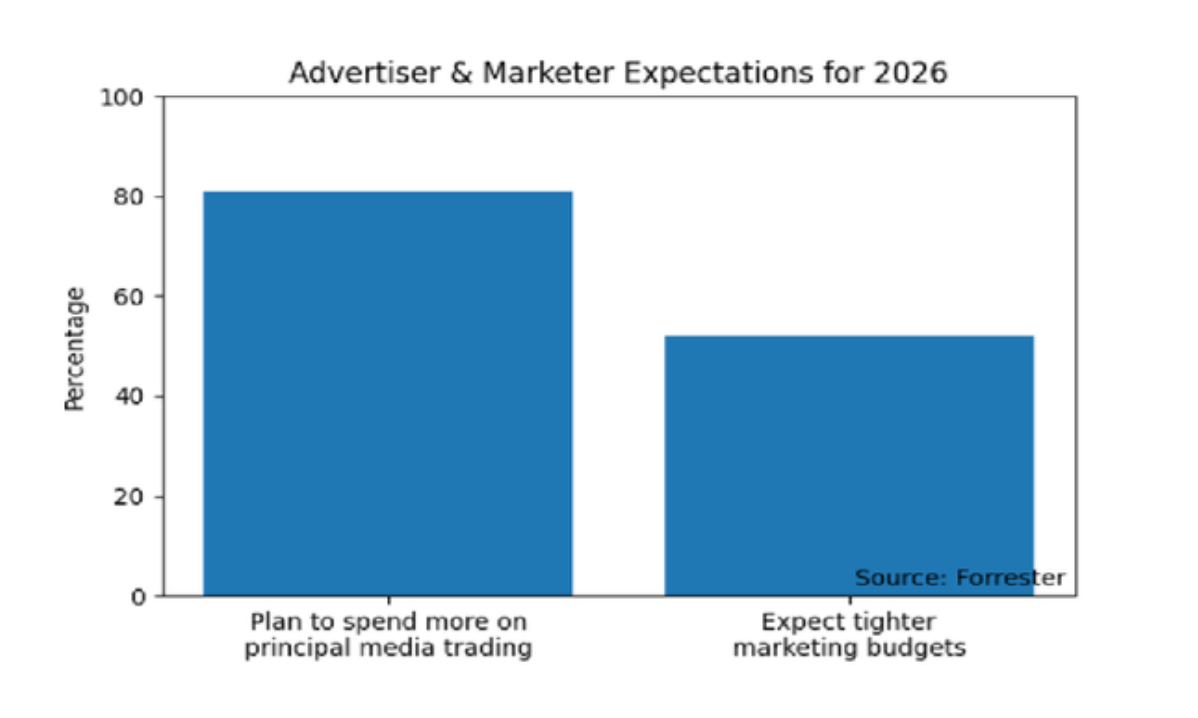
Translation: instead of acting purely as agents, media partners buy inventory themselves and resell it to brands, often bundled with data, tech, or guarantees.
The appeal is predictability: clearer pricing, faster execution, and less complexity than open-market programmatic.
For brands, this reflects frustration with opaque fees, measurement gaps, and underperforming black-box platforms. However, the model comes with trade-offs: reduced transparency into where ads actually run and potential misalignment of incentives.
The article suggests many marketers see principal buying as a pragmatic response to an increasingly fragmented media landscape, not a permanent solution. The shift also mirrors a broader trend: brands reclaiming strategic control while outsourcing executional complexity.
Read: Most Marketers Plan More Principal Media Buying In 2026
Organic search traffic is down year over year 📉
New data shows organic search traffic declining year over year for many sites. It’s done 2.5% year over year, far from the 25% to 60% drops often cited in articles.
The causes aren’t mysterious: more SERP features, AI-generated answers, zero-click results, and increased competition from marketplaces and platforms.
Even when rankings hold, click-through rates are shrinking as Google answers questions directly or pushes users toward paid placements.
This doesn’t mean SEO is “dead,” but it does mean its role is changing. Organic traffic is becoming less about volume and more about quality, authority, and defensibility.
Brands that rely solely on informational content are most exposed, while those with strong brands, proprietary data, or transactional relevance are holding up better. The takeaway is strategic diversification: SEO still matters, but it can’t be the only growth engine.
Visibility without clicks is the new normal. SEO strategies must adapt to an answer-first internet.
Read: Organic search traffic is down 2.5% YoY, new data shows
Most Instagram ads ran on Reels in 2025 🎥
CNBC reports that in 2025, the majority of Instagram ad impressions appeared on Reels, a clear signal of where Meta is steering both users and advertisers.
As feed engagement plateaus, Reels has become the primary growth and monetization engine, absorbing more budget and inventory.
For advertisers, this shifts creative and measurement expectations: Reels ads favor motion, storytelling in the first seconds, and content that feels native rather than polished.
Static assets and repurposed feed ads increasingly underperform. The data confirms what performance teams have been feeling all year, if your creative isn’t built for Reels, you’re leaving reach and efficiency on the table.
It also reinforces a broader trend: platforms don’t just reward attention, they force format adoption through inventory allocation.
Creative strategy now follows inventory, not the other way around. Reels-first is no longer optional.
Read: Most of Instagram’s ads ran on Reels in 2025, data shows
Thanks for reading! If you enjoyed this newsletter, share it with your network.
Make sure to subscribe to stay updated on our next editions. Have questions, topic suggestions, or insights to share? Reach out, we value your feedback!
Carla from Donutz Digital 🍩