

Welcome to "Donut Break the Internet", Donutz Digital’s weekly newsletter dedicated to digital marketing news. Here, you'll find a roundup of must-know updates, practical tips, and in-depth analyses on marketing.
This week's Donutz:
Your Brand Might Be Famous in AI, Or Invisible 🎲
Claude Crashes the Super Bowl to Roast ChatGPT's Ad Plans 🏈
LinkedIn Just Lost 60% of Its Traffic. Here’s Why Your SEO Strategy Needs a Total Rewrite ⚠️
The Science Behind Video Ads People Like 🎬
If you haven’t already, make sure to subscribe! Until then, enjoy your read. 🚀
Your Brand Might Be Famous in AI, Or Invisible 🎲
Picture this: you ask ChatGPT for “best noise-canceling headphones” 100 times. You’d expect to see Sony and Bose consistently, right? Wrong. Research from SparkToro and Gumshoe.ai just dropped a bombshell that should terrify (or liberate) every marketer chasing AI visibility.
The study analyzed nearly 3,000 AI responses across ChatGPT, Claude, and Google AI, asking the same 12 questions repeatedly. The results? Chaos. AI tools produced identical recommendation lists less than 1% of the time. Getting the same list in the same order? That’s a 1-in-1,000 shot. Even list lengths varied wildly, some responses gave 2 recommendations, others spit out 10+.
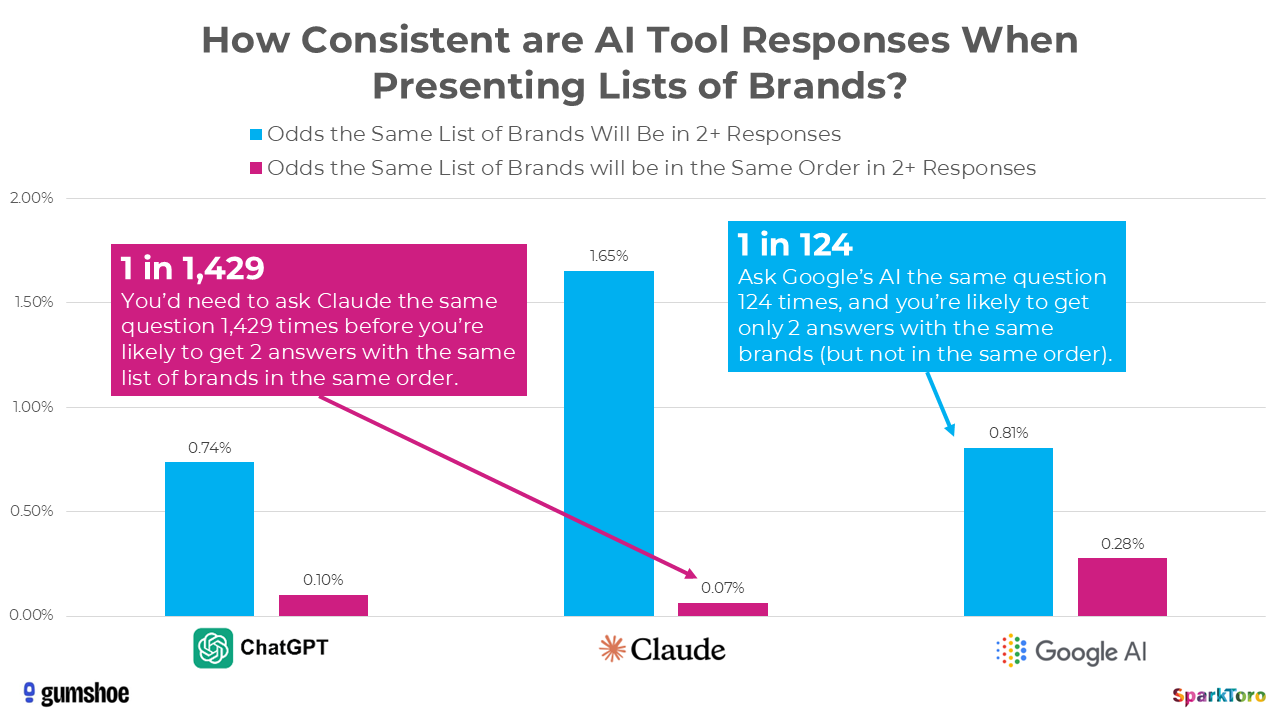
Here’s what actually matters: brand frequency, not position. In tight categories like cloud computing providers, top brands appeared consistently across many queries. But in broader spaces like science fiction novels, results scattered like confetti. The kicker? Rankings are essentially worthless. Any tool claiming to track your “AI ranking position” is selling snake oil.
What does work? Track how often your brand appears across hundreds of varied prompts. It’s messy, imperfect, but closer to reality than pretending AI acts like Google’s page one. The research also revealed that intent still matters, change “headphones for podcasting” to “headphones for gaming” and the brand set shifts accordingly. AI captures underlying intent even when prompts are phrased wildly differently.
For high-stakes decisions: healthcare recommendations, financial products, this variability is concerning. Users assume AI lists reflect stable market consensus, but they’re really rolling dice with each query. Stop obsessing over position #1 in AI responses. Focus on becoming part of the “consideration set” that surfaces frequently across diverse queries targeting your core audience intent.
Need help navigating AI visibility strategy? Our team at Donutz Digital specializes in developing SEO approaches that actually move the needle. Let’s talk.

Claude Crashes the Super Bowl to Roast ChatGPT's Ad Plans 🏈
Anthropic just spent millions on Super Bowl commercials with one goal: make you uncomfortable about ads in AI chatbots. And judging by Sam Altman’s 280-character meltdown, it worked.
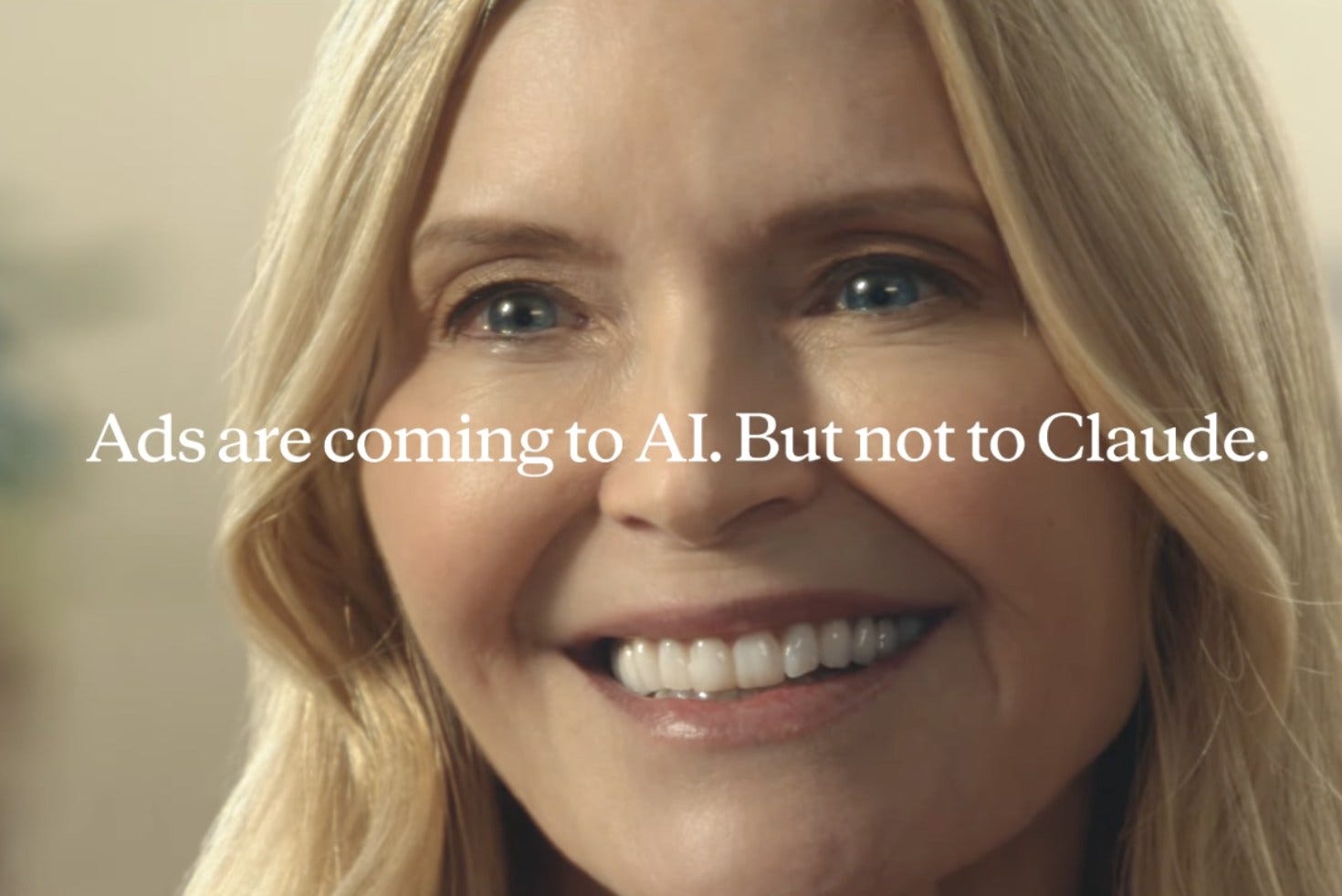
The campaign features darkly comedic scenarios where people ask AI deeply personal questions, how to communicate with mom, building a six-pack, only to get derailed by jarring, irrelevant ads. One spot shows a fitness query interrupted by an ad for height-boosting insoles. Another pivots a relationship question into a pitch for a cougar-dating site called “Golden Encounters.” The tagline lands like a gut punch: “There’s a time and place for ads. Your conversations with AI should not be one of them.”
The timing? Chef’s kiss. OpenAI announced ads coming to ChatGPT’s free tier just weeks before the Big Game. Anthropic seized the moment, positioning Claude as the principled alternative. The company stated Claude will remain ad-free, no sponsored links, no third-party placements, no algorithmic manipulation toward advertisers.
OpenAI CEO Sam Altman called the ads “funny” but “clearly dishonest,” insisting ChatGPT would “obviously never run ads in the way Anthropic depicts them.” But here’s what’s fascinating: marketing professor Scott Galloway argues the ad’s real genius isn’t the humor, it’s recognizing AI’s dominant use case is therapy. People reveal their most intimate questions to chatbots. Interrupting that with monetization creates a dystopian scenario Anthropic expertly exploited.
The brand warfare signals a tonal shift. Anthropic, founded by former OpenAI researchers who split over safety concerns, has historically kept criticism oblique. This Super Bowl salvo marks gloves-off competition as the AI wars move from model benchmarks to market share, from technical specs to user trust. Anthropic’s business model, enterprise contracts and paid subscriptions reinvested into improvements, hit $9 billion in annual revenue in under two years.
The broader question: will ad-supported AI become standard, or will users pay premium prices for ad-free experiences? Anthropic’s betting that restraint is a competitive advantage.
LinkedIn Just Lost 60% of Its Traffic. Here's Why Your SEO Strategy Needs a Total Rewrite ⚠️
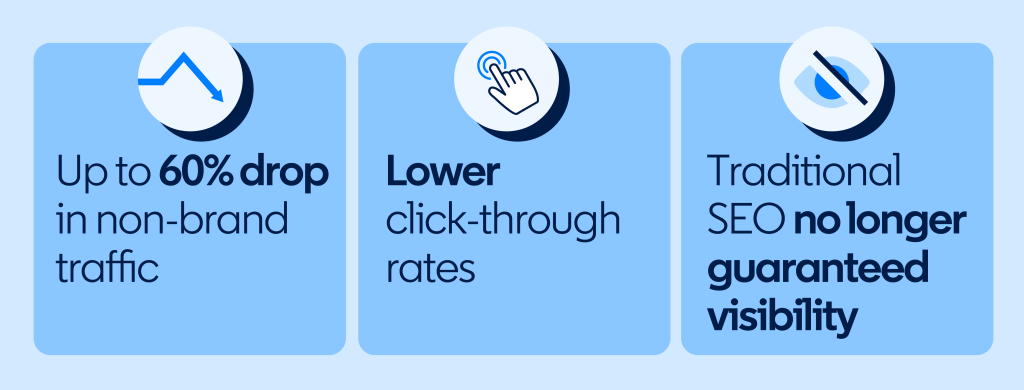
LinkedIn’s B2B marketing team just published something rare: a candid post-mortem of their traffic apocalypse. Non-brand awareness traffic plummeted up to 60% across key B2B topics. Rankings stayed stable. Click-through rates? Cratered. The culprit? Google AI Overviews delivering answers instantly, without requiring clicks.
The platform’s response reveals the future of B2B discovery: abandon “search, click, website” thinking. LinkedIn’s new framework is “be seen, be mentioned, be considered, be chosen.” They created an AI Search Taskforce spanning SEO, PR, editorial, product, and brand teams to tackle visibility in generative AI environments.
Early strategies included correcting misinformation in AI responses, publishing owned content optimized for generative visibility, and testing LinkedIn social content’s strength in AI discovery. The results? Meaningful lift in visibility and citations, especially from owned content. One datapoint: Google AI Mode cited LinkedIn in roughly 15% of responses, making it the #2 most-cited domain behind YouTube.
But here’s the twist: LinkedIn’s “new learnings” are basically established SEO best practices repackaged for AI. Use strong headings. Create clear information hierarchy. The real shift is measurement. Traffic no longer equals success. Brands can lose market share despite maintaining strong traditional SEO performance because discovery now happens inside AI environments before users reach websites.
This creates what LinkedIn calls a “dark funnel” measurement problem. Traditional dashboards tracking only visits risk undervaluing visibility wins or hiding looming losses. The platform argues B2B brands must shift investment from “rented prominence” (paid ads) toward “owned prominence” built through brand memory and distinctive assets, because AI-driven discovery increasingly mediates recommendations without displaying advertisements.
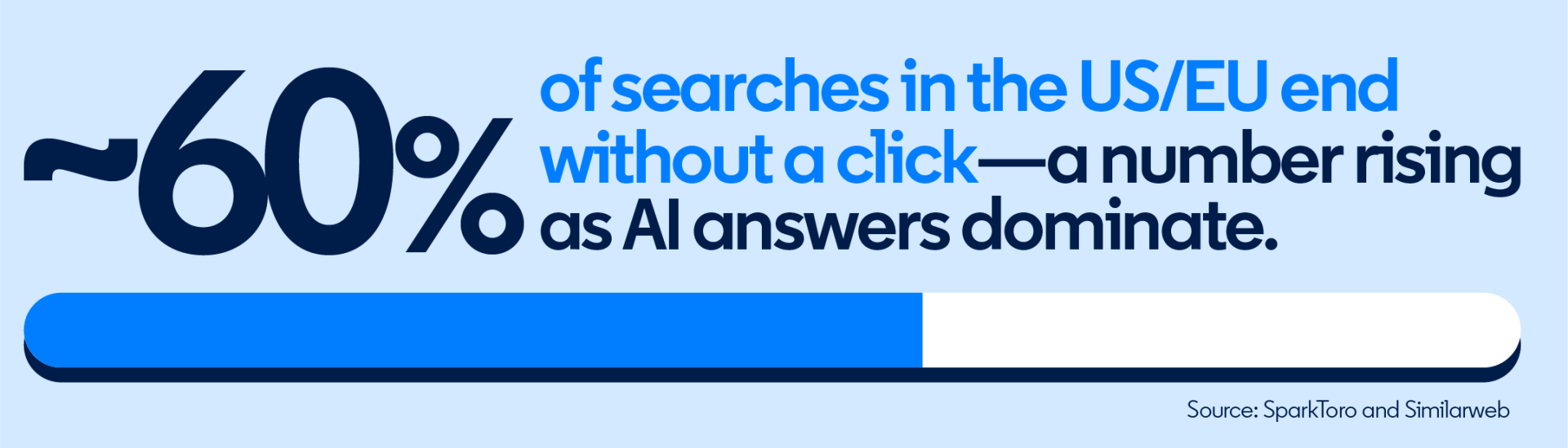
The takeaway for CMOs? Your established playbook isn’t broken, but it needs updating. Focus on being frequently mentioned across AI platforms, not obsessing over traffic metrics that no longer correlate with business outcomes. Approximately 60% of searches in the US and EU already end without clicks. That number’s rising.
The Science Behind Video Ads People Actually Like 🎬
Here’s an uncomfortable truth: 87% of people say video convinced them to buy something, yet most video ads still bomb. Why? Because marketers focus on features when viewers crave feelings.
Recent research reveals what makes video ads stick, and it’s not production budgets or celebrity endorsements. The science points to three core drivers: emotional storytelling, authenticity, and strategic pacing. When brands nail these elements, viewers don’t just watch, they emotionally connect, becoming 3x more likely to purchase and 5x more likely to recommend.
The neuroscience is fascinating. Watching emotional brand stories triggers oxytocin (the trust hormone), dopamine (pleasure and reward), and cortisol (heightened attention during tension). This cocktail creates positive brand associations that fact-based ads never achieve. Stories stick in memory 65% better than traditional product-focused messaging.
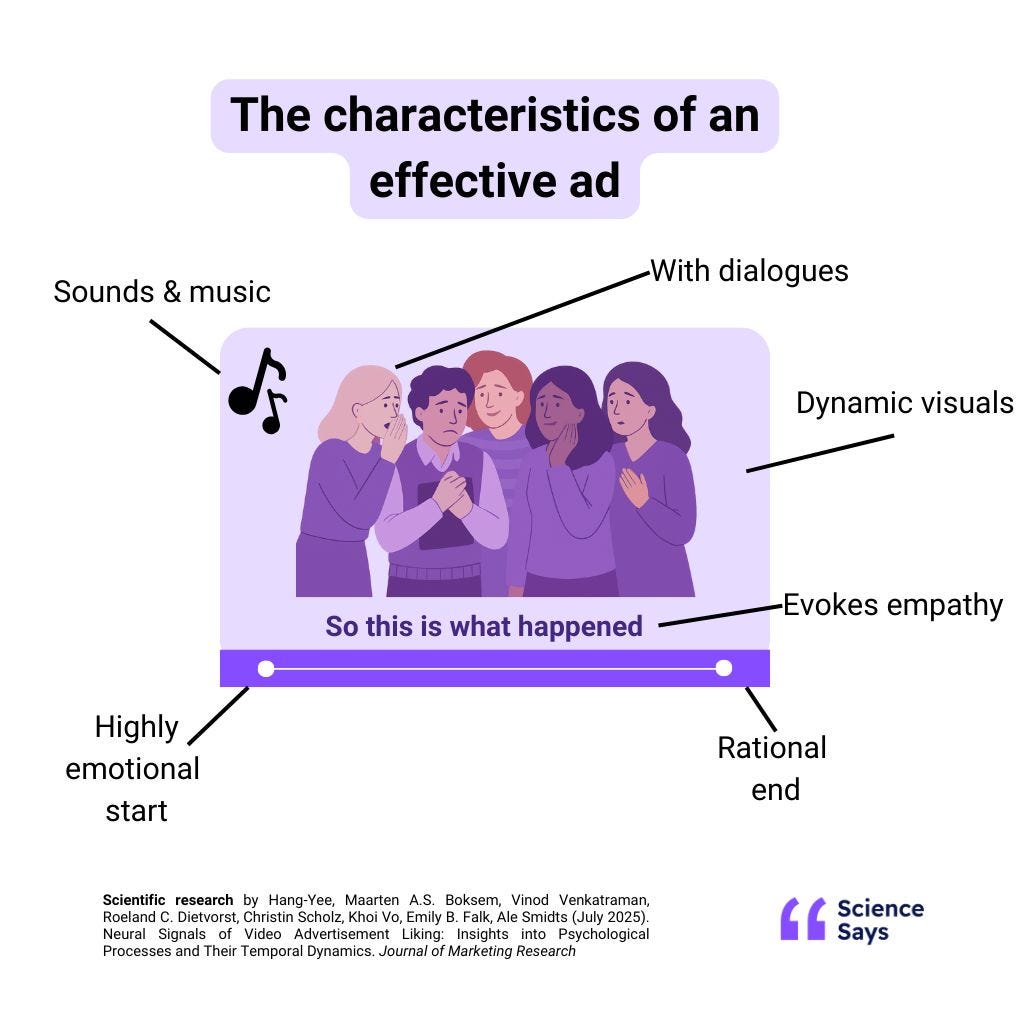
But here’s where most brands mess up: they confuse storytelling with feature dumps. An athletic brand isn’t selling sports apparel, they’re selling the dream of reaching personal goals. A pet food company isn’t selling nutrition, they’re selling a long, healthy life for a beloved companion. The emotional hook demonstrates what you do for customers, not what you sell.
Authenticity matters more than polish. Consumers increasingly reject overly produced content in favor of real stories. The data shows personalized video delivers 3-4x the loyalty boost of generic content, while 58% of consumers are more likely to buy from brands using next-gen video. Yet 44% of consumers report never receiving video from brands they do business with, a massive missed opportunity.
Format choices matter too. Short-form video dominates with 50% engagement rates for content under 60 seconds. Silent videos with captions perform exceptionally well since 62% watch on smartphones in public spaces. Platform-specific strategies are essential, what works on TikTok bombs on LinkedIn.
The strategic approach? Build an emotional arc: hook viewers with surprise or joy in the first 3 seconds, develop empathy through relatable characters facing familiar challenges, create narrative tension that keeps them watching, and resolve with your brand as the natural solution. Skip vanity, authority, insincerity, puffery, and gimmickry, the five deadly sins that destroy viewer trust.
Dive deeper into video ad psychology
Want to create video content that actually converts? Donutz Digital crafts emotionally-driven campaigns that build brand loyalty and drive measurable results. See our work.
Thanks for reading! If you enjoyed this newsletter, share it with your network.
Make sure to subscribe to stay updated on our next editions. Have questions, topic suggestions, or insights to share? Reach out, we value your feedback!
Carla from Donutz Digital 🍩